Bashi Names: When a Name Tells a Story
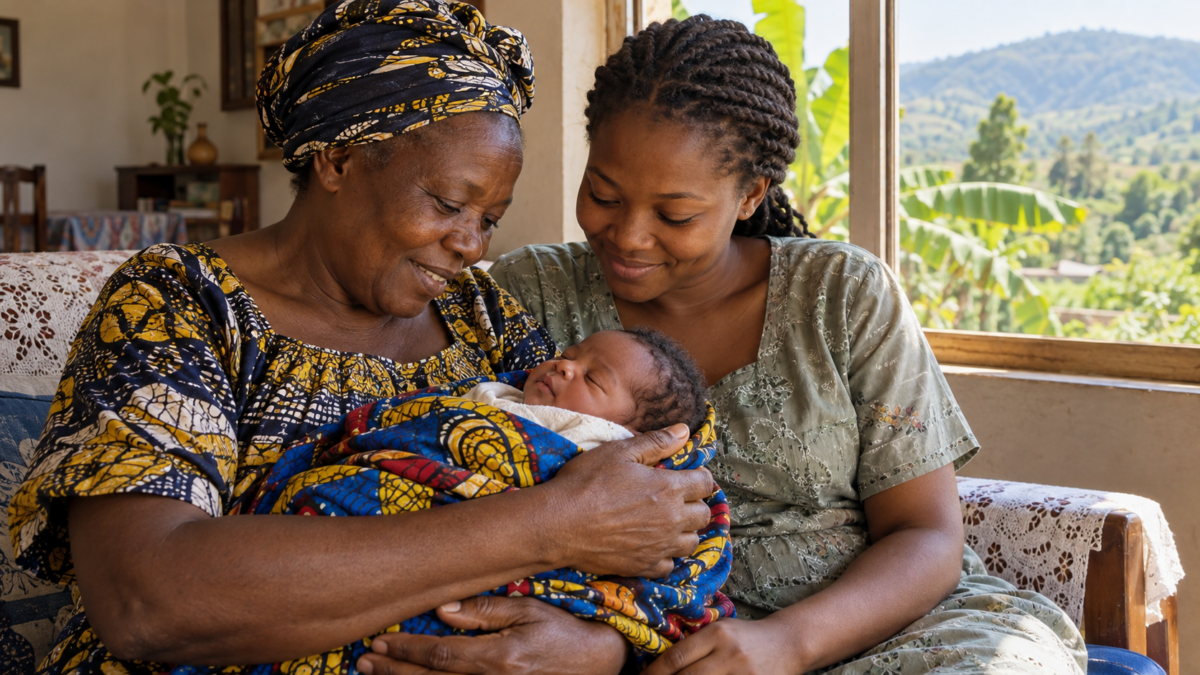
Among the Bashi, a name is never chosen at random. It keeps the trace of a season, a joy, a hardship or a piece of advice. A journey into these names that speak.
In a school in Lyon, Toronto or Kampala, a teacher asks a child: “And your name, what does it mean?” The child shrugs. They carry a Mashi name, but no one has ever explained what it means.
That’s a shame, because among the Bashi a name is often a whole sentence. It tells the circumstances in which the child was born, what the parents hoped for, the advice they wanted to give, and sometimes even what was happening in the family at that moment.
Knowing the meaning of your name means receiving a small piece of your family’s history. For Bashi scattered around the world, it is also a thread that ties them to the Bushi.
A Mashi name is carried like a message that parents entrusted to their child for life.
Four ways to name a child
Bashi names are not mere labels. They reflect the events, values and beliefs surrounding a birth. They can be grouped into four broad families.
The moment of birth: a good harvest, the rainy season, a stroke of luck.
Advice or a prayer addressed to the child, often phrased as a sentence.
A physical trait noticed at birth: build, the shape of the eyes.
Tensions in the household, especially in polygamous families: rivalry, jealousy, mistrust.
Sixteen names and what they say
Here is a selection of Bashi names and their meanings. Some authors also link them to biblical figures; we show these links in small print, as one possible reading among others.
Joy and blessing
The one who brings joy and laughter.
The one who has received much.
Luck, good fortune at the moment of birth.
Born in a time of plentiful harvest.
Wisdom and counsel
The one who must know how to hold their tongue and weigh their words.
The one who seeks advice before acting.
The one who keeps their resolutions.
God knows you perfectly.
Courage and strength
The one who shakes their adversary.
The one who brings down the attacker.
The one who swoops on the enemy without warning.
The land is going through hardship, but we must keep our courage.
Peace and faith
The one who brings peace.
The one whose descendants are entrusted to God.
The one protected by good omens.
That which is sacred, consecrated.
When a name carries the wounds of the home
Not all Bashi names are blessings. In polygamous families, a mother sometimes gave her child a name that answered a co-wife or the in-laws. Bagálane speaks of the jealousy surrounding the family; Bahimizwé announces that the adversaries have been defeated.
These names are small family chronicles. They tell of a rivalry, a victory, a grudge. But it is the child, not the wounded adult, who then carries them for life: at school, at work, on their passport.
Mashi names in exile
In the diaspora, many parents give their children a Christian or international first name and keep the Mashi name second. Others simplify the spelling: the rh, the c pronounced “ch” and the circumflex accents often vanish from official forms. Over the years, some children end up shortening their own names so they no longer have to spell them out.
And which names do we want to pass on?
Let’s take the time to ask ourselves. Should we still give a child a name that settles a conflict between adults? Is it fair that a child carries for life the trace of a jealousy that was never theirs? On the other hand, giving up Mashi names for “more practical” first names: isn’t that erasing, in a single generation, what our ancestors took centuries to build?
Perhaps the answer is to keep what matters most: names that bless, that counsel, that give courage. And to carry them with pride, wherever we live.
The meanings of these names are drawn mainly from the list published on the Nyabangere blog. Meanings and biblical links may vary between families and regions of the Bushi; your corrections are welcome.